Music
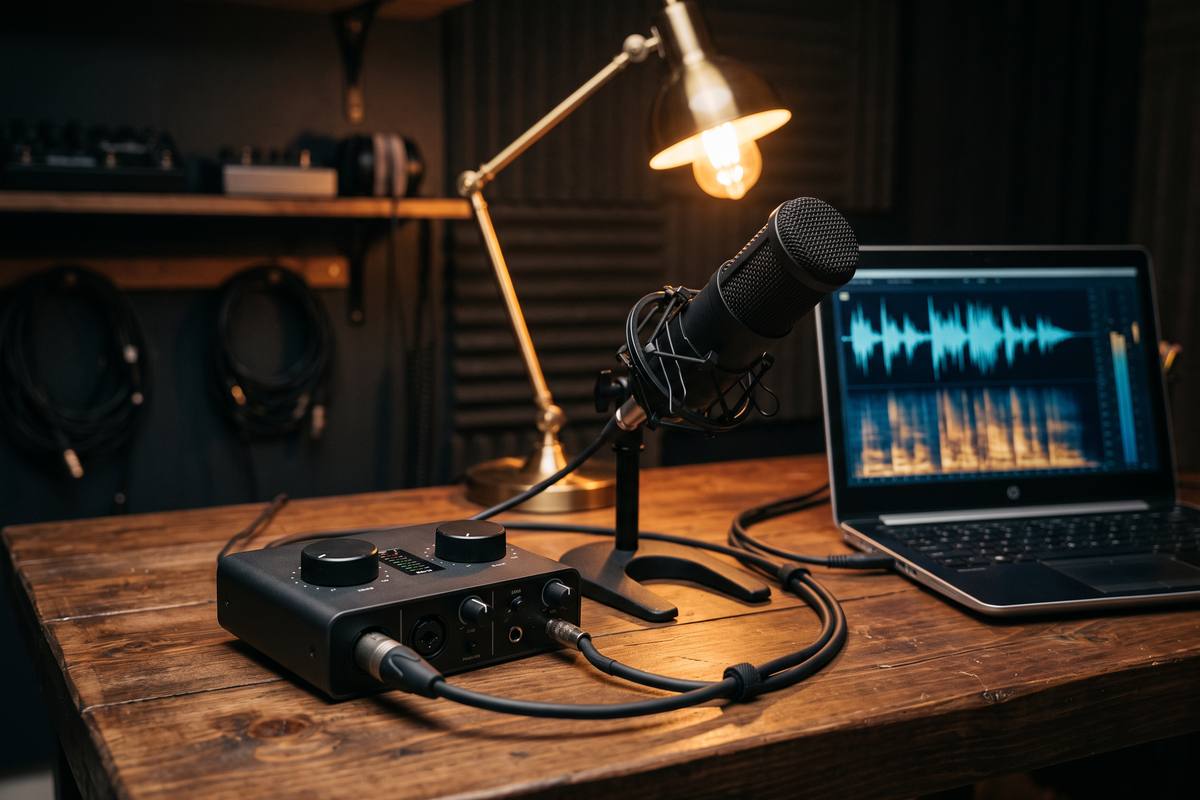
Music carries pace
A track sets tempo and expectation. Choose it for the rhythm of the edit, then cut to it — not the other way round.
Sound and music for short-form video
Viewers tolerate imperfect pictures and rarely tolerate poor audio. These guides cover the three decisions that matter: what music carries the edit, how the voice is recorded, and how the mix survives a phone speaker.
Where to start
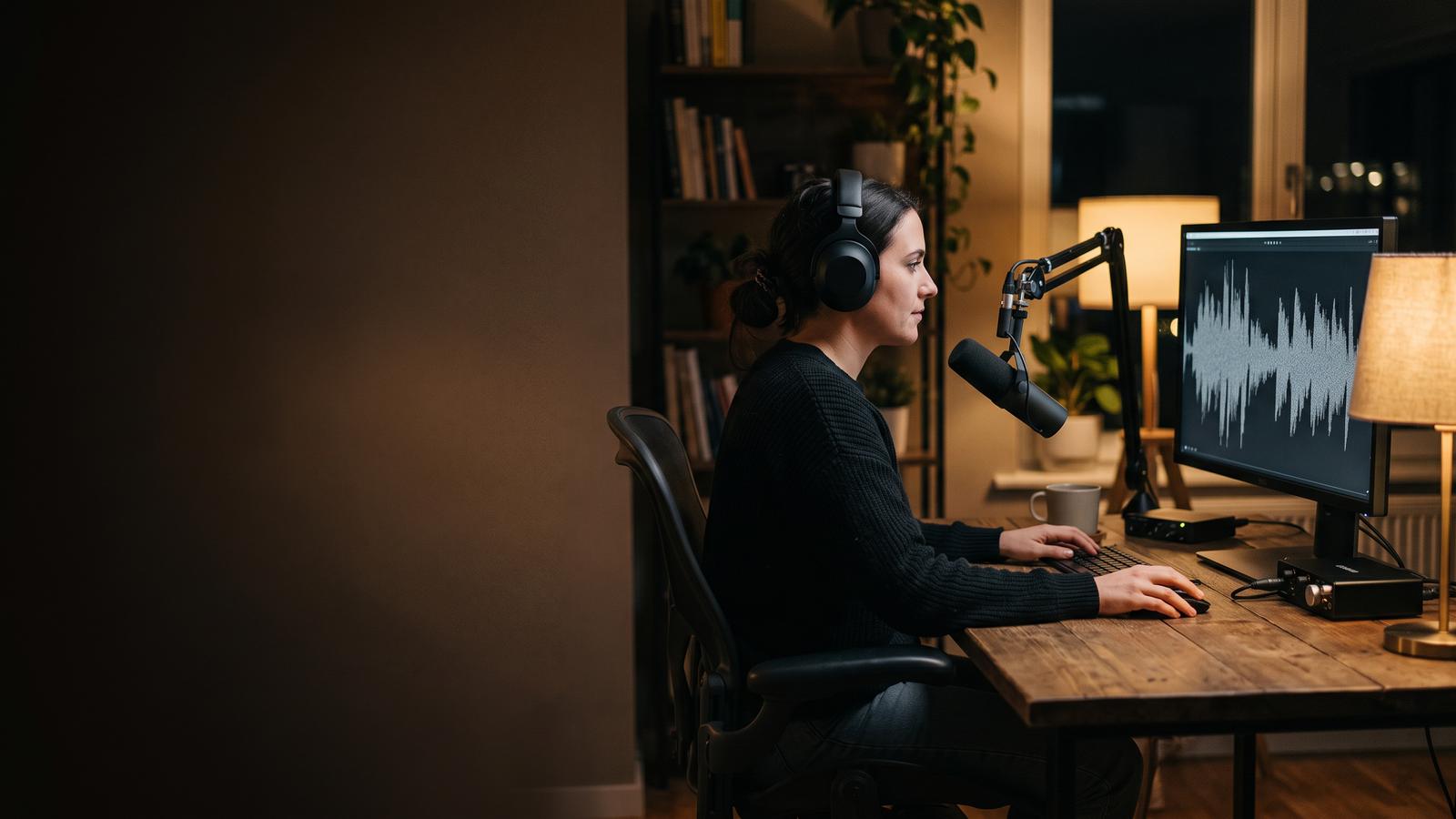
The most common audio problem in short-form video is a voice recorded too far from a microphone and then buried under a music track chosen to hide it. Solve the voice first and everything else becomes easier.
Once the voice is clean, music becomes a pacing tool rather than a cover-up, and levels become predictable because you are balancing two clear elements instead of fighting a muddy one.
The three jobs
Each has one clear job. When one of them is doing two jobs, the mix sounds wrong and nobody can say why.
Music
A track sets tempo and expectation. Choose it for the rhythm of the edit, then cut to it — not the other way round.
Voice
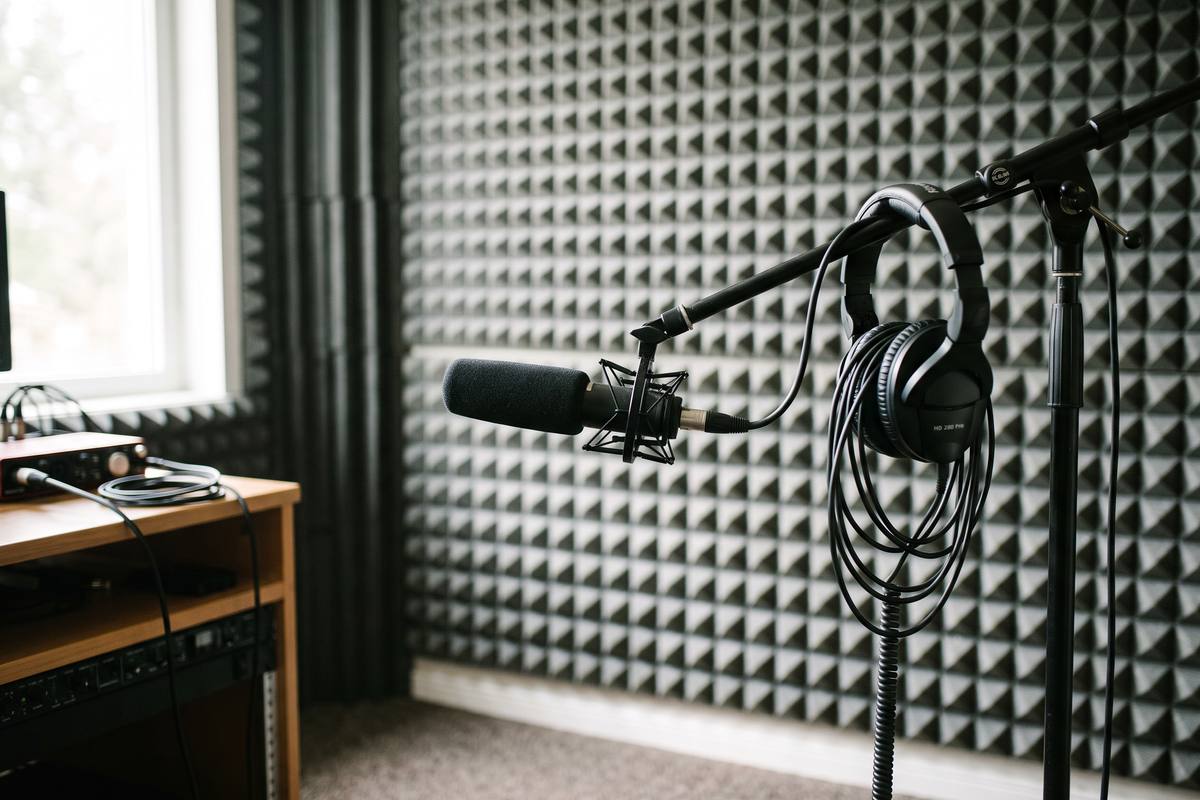
Everything the viewer must understand arrives through speech. Distance, room reflections and background noise are the three things to control.
Levels
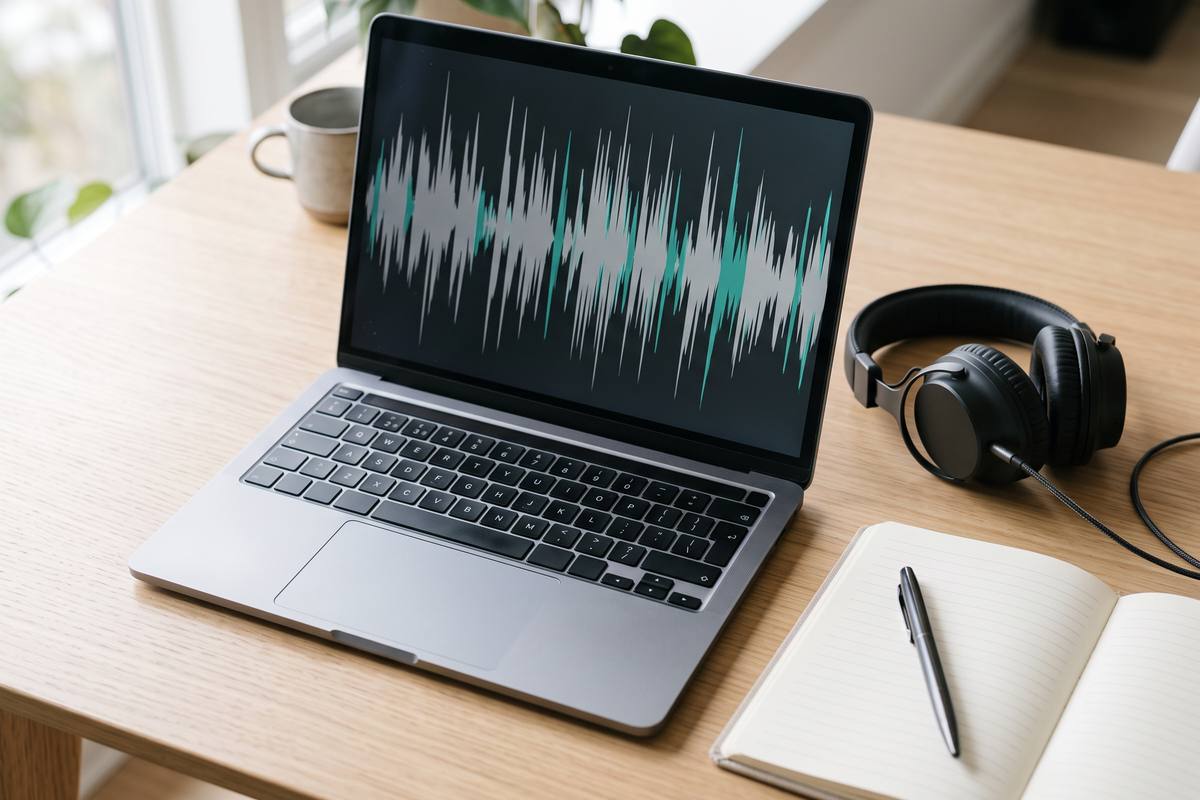
Phone speakers cannot reproduce low frequencies. A mix that works on headphones can still sound thin and unclear on a phone.
Before you record
Run through this before every recording session, whether you are filming or recording voice separately.
Music choices
The same video can work with several kinds of track. What matters is the tempo and how much space the music leaves for the voice.
| Track character | Tempo | Leaves room for voice | Use it for |
|---|---|---|---|
| Percussive, minimal | Fast | Yes, little melodic content | Talking clips, tutorials, quick demonstrations |
| Warm acoustic | Medium | Partly, in the mid range | Process videos, calm explanations |
| Ambient pad | Slow | Yes, occupies the low and high ends | Openings, quiet moments, product detail |
| Full arrangement | Any | No, competes with speech | Montages and sections without dialogue |
| Rhythmic bed with a drop | Medium to fast | Only with careful ducking | Reveals and before-and-after sequences |
Room treatment
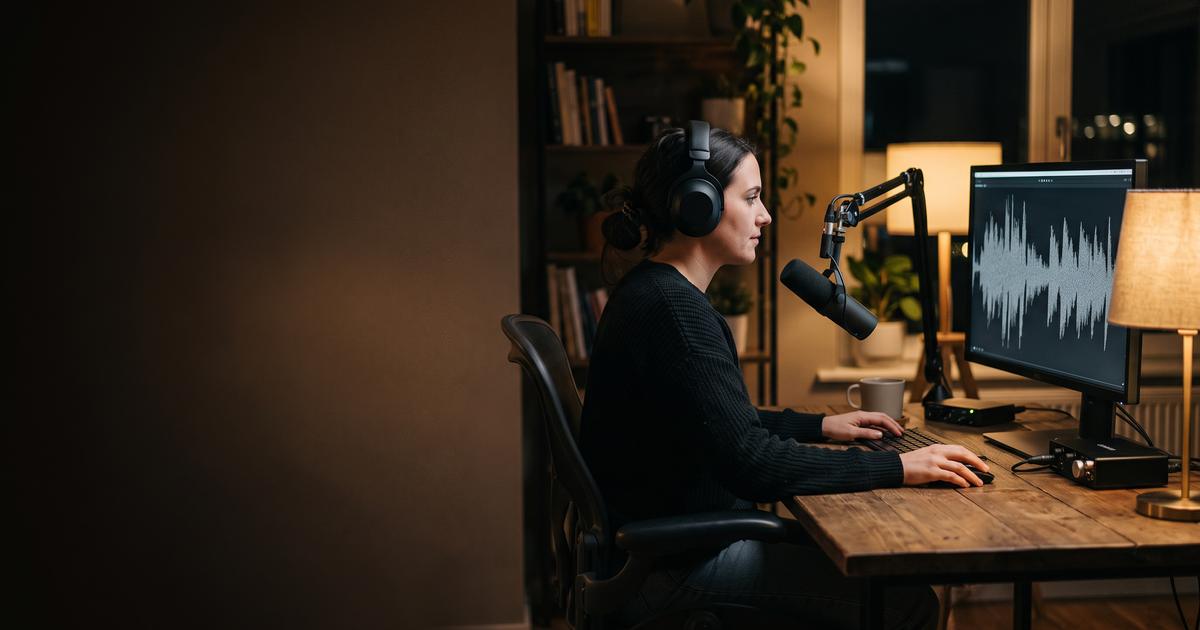
Untreated rooms sound hollow because hard surfaces reflect the voice back into the microphone a fraction of a second later. The result is a boxy quality that cannot be removed afterwards without damaging the recording.
You do not need foam panels. A duvet behind the speaker, a rug on a hard floor, a bookshelf and recording from the middle of the room rather than close to a wall will remove most of it.
Audio questions
Phone speakers reproduce very little low frequency content and are physically small. A mix balanced on headphones often carries too much bass and too little presence in the voice range, which is why it sounds thin and unclear on a phone.
The voice should sit clearly above the music at all times. A practical starting point is around eight to twelve decibels of difference during speech, with the music rising in the gaps.
Steady noise such as a fan can be reduced if you recorded ambient sound separately. Speech from a busy street or a crowded cafe is very difficult to rescue, so re-recording is usually faster.
Recording during filming keeps the performance natural, but recording afterwards gives better sound quality and the freedom to correct the script. Many creators do both and use the separate recording as the main track.
Short. In vertical video, viewers decide within a few seconds, so the voice or a strong visual should arrive almost immediately and the music should support it rather than delay it.
Guides
Read them in order: music, voice, then levels. Each ends with a short checklist you can use in the next edit.
Music
Tempo, space and structure: how to pick a track that supports the video instead of competing with it.
Voiceover
Distance, room and level: the three variables that decide whether a home recording is usable.
Mixing
Why a mix that sounds good on headphones fails on a phone, and the level decisions that fix it.
Feedback
Describe what you hear and how it was recorded. We answer every message and often turn the answer into a published example.